Leak Detection in Rancho Cordova, CA
A rising water bill, a warm spot on the floor, or the sound of running water with everything off. We connect you with a local plumber who finds leaks without guesswork.
A hidden leak, whether it's behind a wall, under a slab, or somewhere along a buried water line, rarely gives you a clear sign of exactly where it is. What you notice is usually a symptom: an unexplained rise in the water bill, a warm patch on the floor if it's a hot water line, the sound of water running when nothing's turned on, or a musty smell that won't go away.
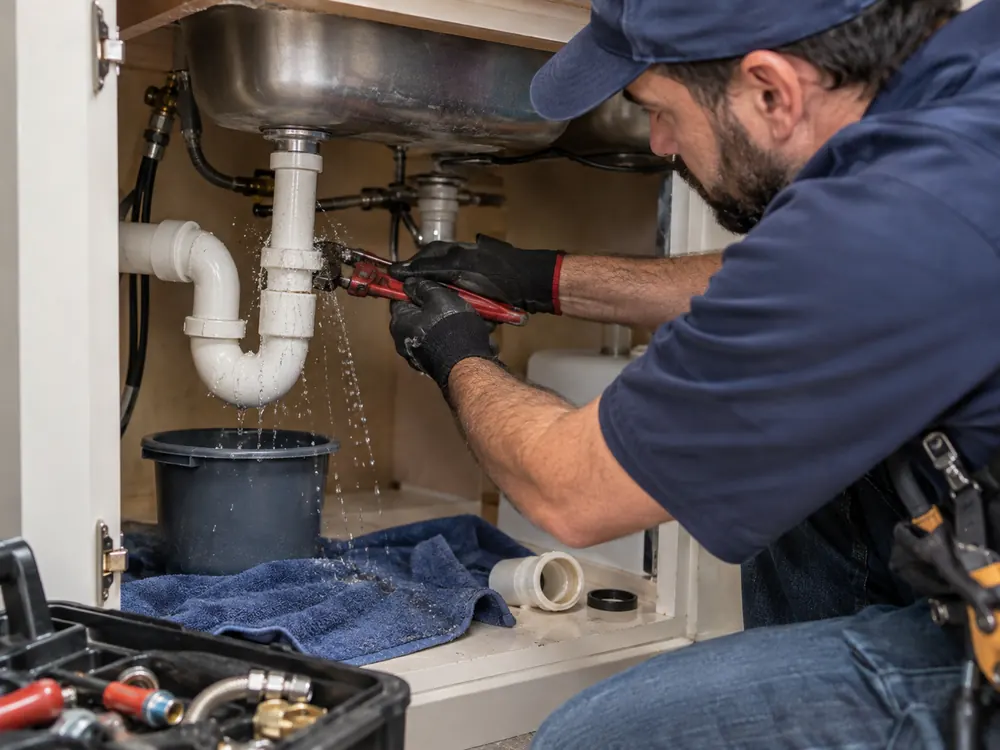
How leak detection actually works
A plumber uses acoustic listening equipment to pick up the sound of water escaping under pressure, which travels differently through slab, soil, and pipe material. Thermal imaging can spot temperature differences on a floor or wall caused by a hot water leak. For pool and irrigation leaks, pressure testing isolates which section of a line is losing water. None of this requires opening a wall or cutting into a slab first. That step only happens once the leak's location is confirmed.
Slab leaks specifically
A slab leak happens when a water line running under a home's concrete foundation develops a leak, often from a pinhole in copper pipe caused by corrosion. Signs include a warm area on an otherwise cool floor, the sound of running water beneath the slab, and unexplained cracks in flooring or the foundation itself. Left alone, a slab leak can undermine the foundation over time. This is why acting on the early signs matters.
Why locating it precisely matters
The cost difference between a pinpointed repair and an exploratory dig is significant. Precise leak detection means the repair, whether it's a slab leak, a wall leak, or a buried line, involves opening the smallest possible area rather than guessing and cutting a much larger section of flooring, drywall, or yard.
Where a hidden leak typically shows up
A hidden leak rarely shows up where it's easiest to reach. Inside the house, it's often a ceiling or wall leak, a stain spreading across drywall, or water tracking down from an upstairs bathroom into the room below. Under the house, a crawlspace leak can go unnoticed for a while since the sound and the moisture stay out of sight until the smell or a spike in the water bill gives it away. Outside, a buried line leak under the yard or a driveway usually surfaces as a soft, unusually green patch of lawn or a hairline crack in concrete. An attic leak is less common but shows up fast, since water dripping down through a ceiling below gets noticed quickly. The same diagnostic approach applies to a single-family home, a rental, a duplex or four-plex, or a small commercial building. What changes is access and who needs to sign off on the work, not the underlying equipment.
A high water bill or a meter that won't stop running
A water bill that's slowly crept up, or a one-time spike that doesn't match your household's actual usage, is one of the clearest signs of a leak that hasn't shown itself anywhere visible yet. The simplest confirmation you can do yourself: shut off every fixture and appliance that uses water, then check the water meter. If the meter is still running with everything off, water is going somewhere. That's exactly the kind of symptom leak detection is built to solve without tearing into the yard or a slab to find out where.
Frequently Asked Questions
Common signs include a warm spot on the floor, the sound of running water when everything is off, an unexplained increase in your water bill, and mold or a musty smell without an obvious source.
The equipment itself doesn't add a large cost relative to what it saves. Finding a leak precisely usually costs far less than an exploratory dig or opened wall, and it avoids unnecessary damage to your home.
Yes, pressure testing can isolate whether a pool or irrigation leak is in the plumbing itself, a fitting, or the pool shell, using a similar diagnostic approach to a household water leak.
If the meter still runs with every indoor fixture off but stops once the irrigation system's own shutoff valve is closed, the leak is in the irrigation line rather than the household plumbing. A plumber can confirm which side of that valve the problem is on before diagnosing further.
It's worth scheduling promptly rather than waiting. A slab leak that continues can damage flooring, drive up your water bill, and in time affect the foundation.
It's more challenging, but a plumber can sometimes correlate a pattern, such as a leak that only appears under certain pressure conditions or at certain times, with pressure testing and monitoring over a short period.
It's helpful, since access to the affected areas and information about when you first noticed symptoms speeds up the diagnosis, but the equipment itself doesn't require you to be present for every step.
A general plumbing inspection checks visible fixtures and connections. Leak detection specifically targets a suspected hidden leak using acoustic or thermal equipment when there's no visible source.
Yes. Shutting off every fixture in the house and watching whether the water meter still moves is a simple first check anyone can do at home; if it moves, that confirms water is flowing somewhere and supports scheduling a professional leak detection.
Acoustic and thermal equipment can generally read through most common flooring types, though very thick or heavily insulated flooring can make a leak's signal slightly harder to pinpoint precisely.
Often the same visit, once the leak is located and a repair approach is agreed on. More complex cases, like a leak requiring a re-route, may need a follow-up appointment to schedule the additional work.
The same visit usually covers both. Once the leak is pinpointed, the plumber can walk you through the repair options on the spot, whether that's a slab leak repair or a section of water line repair, rather than handing off to a separate crew.
If you can locate your main shutoff valve and the leak seems active, shutting it off limits further water loss. Avoid digging at a suspected spot in the yard or opening drywall yourself. Note when you first noticed the symptom, since that timeline helps narrow down the search.
Sometimes a leak is intermittent or sits in a location that's hard to access with basic tools. A plumber using acoustic and thermal equipment, plus a fresh look at where the water bill or meter points, can often narrow down a leak that an earlier visual-only inspection missed.
Yes. The diagnostic approach, acoustic listening, thermal imaging, and pressure testing, doesn't change based on property type. What's different is coordinating access with tenants or a property manager and, on a commercial property, working around business hours.
You Might Also Need
Talk to a Local Plumber About Leak Detection
Calls are answered 24/7. Tell us what's going on and we'll connect you right away.
☎ Call (916) 234-8834